
As organisations collect, process, and store increasing volumes of personal information, Data Privacy has become a strategic business priority rather than just a legal requirement. Data breaches, unauthorised data processing, and evolving privacy regulations continue to expose businesses to financial, operational, and reputational risks.
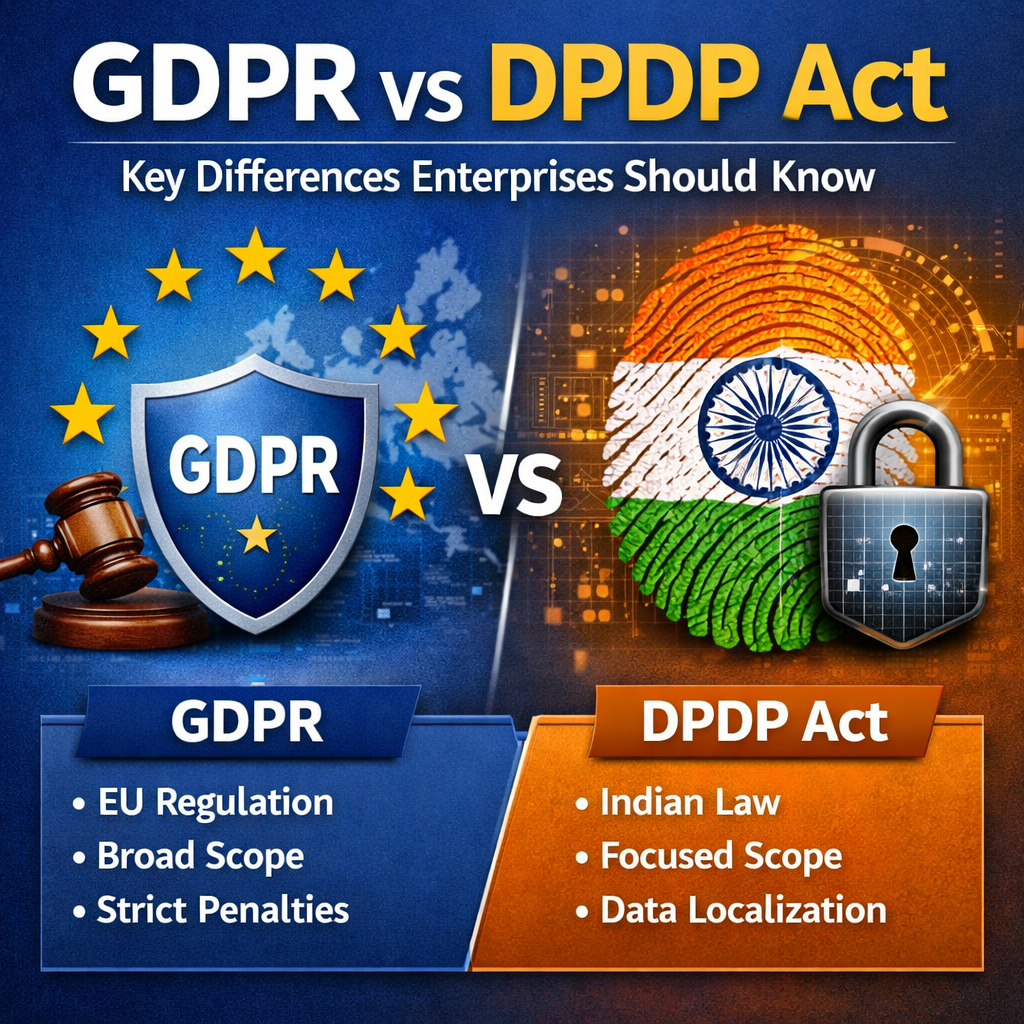
India's Digital Personal Data Protection Act (DPDP Act) establishes a comprehensive framework for protecting digital personal data while promoting responsible data processing practices. The Act also aligns India's privacy landscape with global regulations, making compliance essential for organisations operating in both domestic and international markets.
Understanding the Digital Personal Data Protection Act helps businesses strengthen customer trust, reduce compliance risks, and build resilient data governance programmes.
What is the Digital Personal Data Protection Act?
The Digital Personal Data Protection Act is one of the foremost laws governing the processing of digital personal data in India. This Act specifies how organisations can collect personal data, defines individuals' rights, and establishes the accountability of organisations that process personal data.
The Act applies to the processing of digital personal data in India and to organisations outside the country that process data related to providing goods or services to individuals in India.
The main objectives of this legislation include:
1. Safeguarding individuals' personal data
2. Ensuring proper and transparent processing of data
3. Strengthening the accountability of organisations
4. Promoting innovation and digital growth
5. Establishing penalties for non-compliance
The Act introduces a consent-based approach, requiring organisations to process personal data only for legitimate purposes while upholding the rights of data principals.
Who Must Comply with the Act?
The Digital Personal Data Protection Act applies to a wide range of organisations that collect or process digital personal data.
Entities required to comply with the Act can include:
- Private businesses
- Government entities processing digital personal data
- Start-ups and technology enterprises
- Financial institutions
- Healthcare organisations
- E-commerce companies
- Educational institutions
- International organisations processing the personal data of individuals in India
Under the Act, organisations that handle personal data are classified as Data Fiduciaries, and certain organisations may be designated as Significant Data Fiduciaries, which carry additional compliance obligations.
Any organisation handling customer, employee, vendor, or partner information should evaluate whether its existing Data Privacy practices align with the DPDP framework's requirements.
What are the Key Business Responsibilities Under the DPDP Act?
Achieving compliance with the Digital Personal Data Protection Act requires organisations to implement both governance and technical security measures.
Key responsibilities include:
Obtain Valid User Consent
Businesses must obtain clear, informed, and specific consent before collecting or processing personal data unless another lawful basis applies. Individuals should understand why the organisation collects their information and how it will be used.
Process Data for Legitimate Purposes
Organisations should collect only the personal data necessary to fulfil a defined business purpose. Limiting unnecessary data collection reduces compliance risks and strengthens overall Data Privacy.
Protect Personal Data
The Act requires organisations to implement reasonable security safeguards that protect personal data against unauthorised access, disclosure, alteration, or loss.
Effective security measures include:
Endpoint security
Encryption
Access controls
Continuous monitoring
Threat detection and response
Data discovery and classification
Honour Individual Rights
Businesses should establish processes that enable individuals to:
Access their personal data
Correct inaccurate information
Request data deletion where applicable
Withdraw consent
Raise grievances
Report Data Breaches
Organisations should detect, investigate, and report personal data breaches promptly while taking appropriate steps to minimise their impact.
Maintain Strong Data Governance
Compliance requires continuous governance, not a one-time implementation. Organisations should regularly assess privacy risks, maintain processing records, review consent mechanisms, and monitor compliance across business operations.
Integrated DPDP compliance solutions can simplify data discovery, automate policy enforcement, improve visibility into sensitive information, and support ongoing regulatory readiness.
Frequently Asked Questions About the Digital Personal Data Protection Act
Does the Digital Personal Data Protection Act pertain only to Indian enterprises?
Not necessarily. It might also apply to foreign entities that process digital personal data to provide their products and services to people in India.
What could be the consequences if organisations do not comply with the Digital Personal Data Protection Act?
Non-compliance may result in significant financial penalties, regulatory action, and reputational damage, depending on the nature and severity of the violation.
How does the Digital Personal Data Protection Act enhance data privacy?
The Act outlines organisations' obligations while giving individuals greater control over how businesses collect, use, store, and manage their personal information.
How should organisations prepare for DPDP compliance?
Organisations should assess their existing data-handling practices, identify sensitive personal data, strengthen security controls, implement consent management, automate compliance processes, and conduct regular privacy assessments.
Conclusion
The Digital Personal Data Protection Act is a major step toward ensuring data privacy in India's digital ecosystem. Still, businesses should view compliance not as a regulatory requirement but as a means to improve customer trust, reduce cyber risk, and implement effective data governance.
As privacy regulations continue to evolve globally, organisations need comprehensive visibility into personal data, continuous monitoring, and proactive compliance management. Seqrite's advanced Data Privacy and DPDP solutions help organisations strengthen personal data protection, simplify compliance, and support sustainable business growth.
Ready to simplify your Digital Personal Data Protection Act compliance? Explore Seqrite's Data Privacy and DPDP solutions to strengthen compliance, protect sensitive information, and build customer trust.


















Write a comment ...